
Upsolve AI - Get your data in order... quickly
The conduit between data and decisions

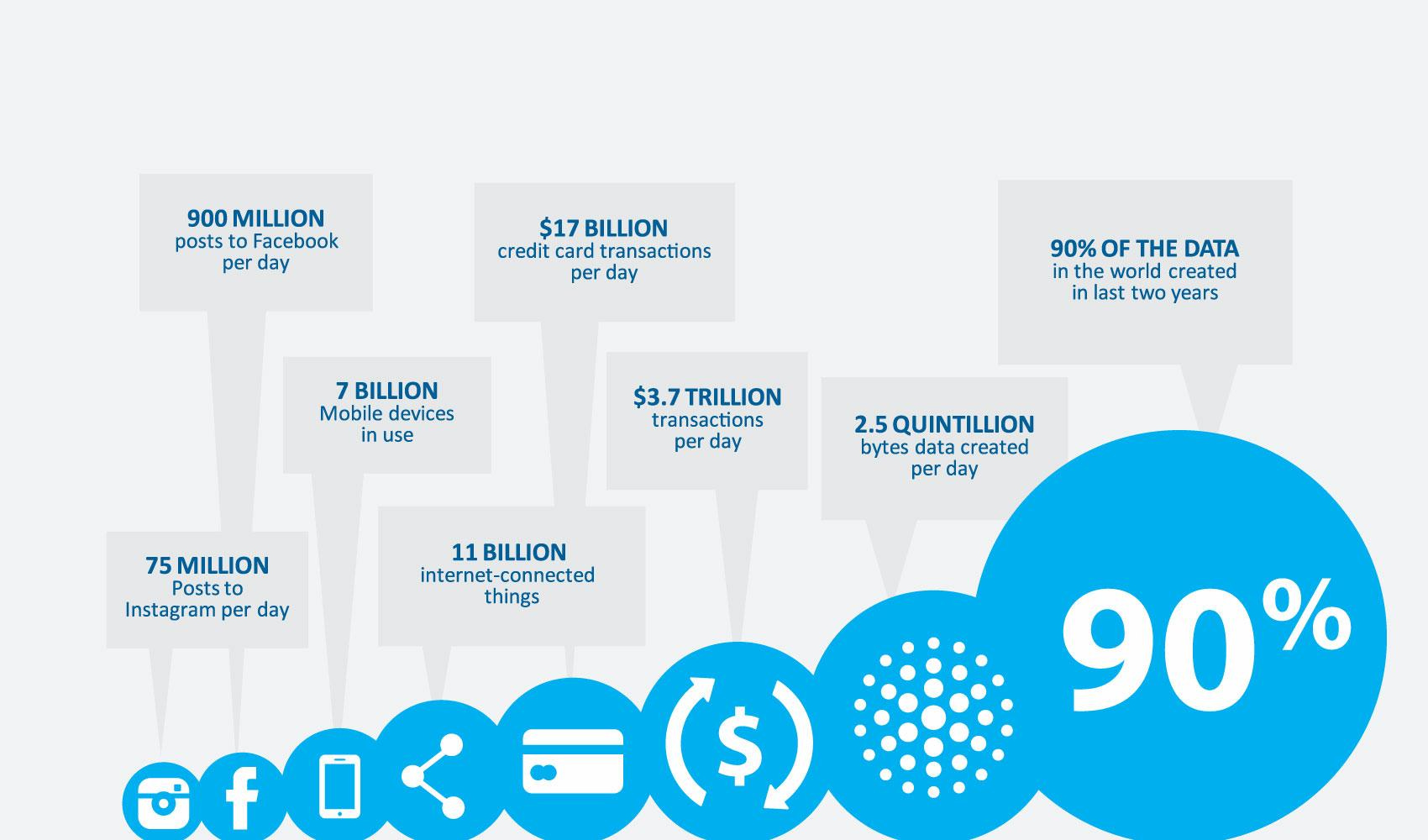
Information has always been the name of the game in business, the probability of a positive outcome in ones business regardless of size is intrinsically linked to the businesses access to information specific to their product/vertical/industry. Whether that’s understanding who your customer is and what their real pain point is (and getting their email) or whether that’s an insight into a specific action a user takes that leads to them being a long term user or what some people call a “Magic Moment”. There are millions of examples, the point being, the wider your access to relevant data and the better your understanding of that data pool, the higher the probability of a good outcome. There is more data washing around now than ever before, obviously, but it’s the rate of growth of the data that is mind blowing. 90% of all available data was created in the last two years. I didn’t believe this stat, it is true and it’s useful for underlining how exponentially the world’s data pool is growing. However, many rapidly expanding companies struggle with fragmented data systems and lack the resources to build robust data infrastructures, primarily because the systems they built weren’t built for today’s data infrastructure. Upsolve AI addresses this critical challenge by offering an AI-powered, customer-facing analytics-as-a-service platform designed to democratise data intelligence and empower businesses to harness their full potential.
The Founders: Industry Veterans with Proven Expertise
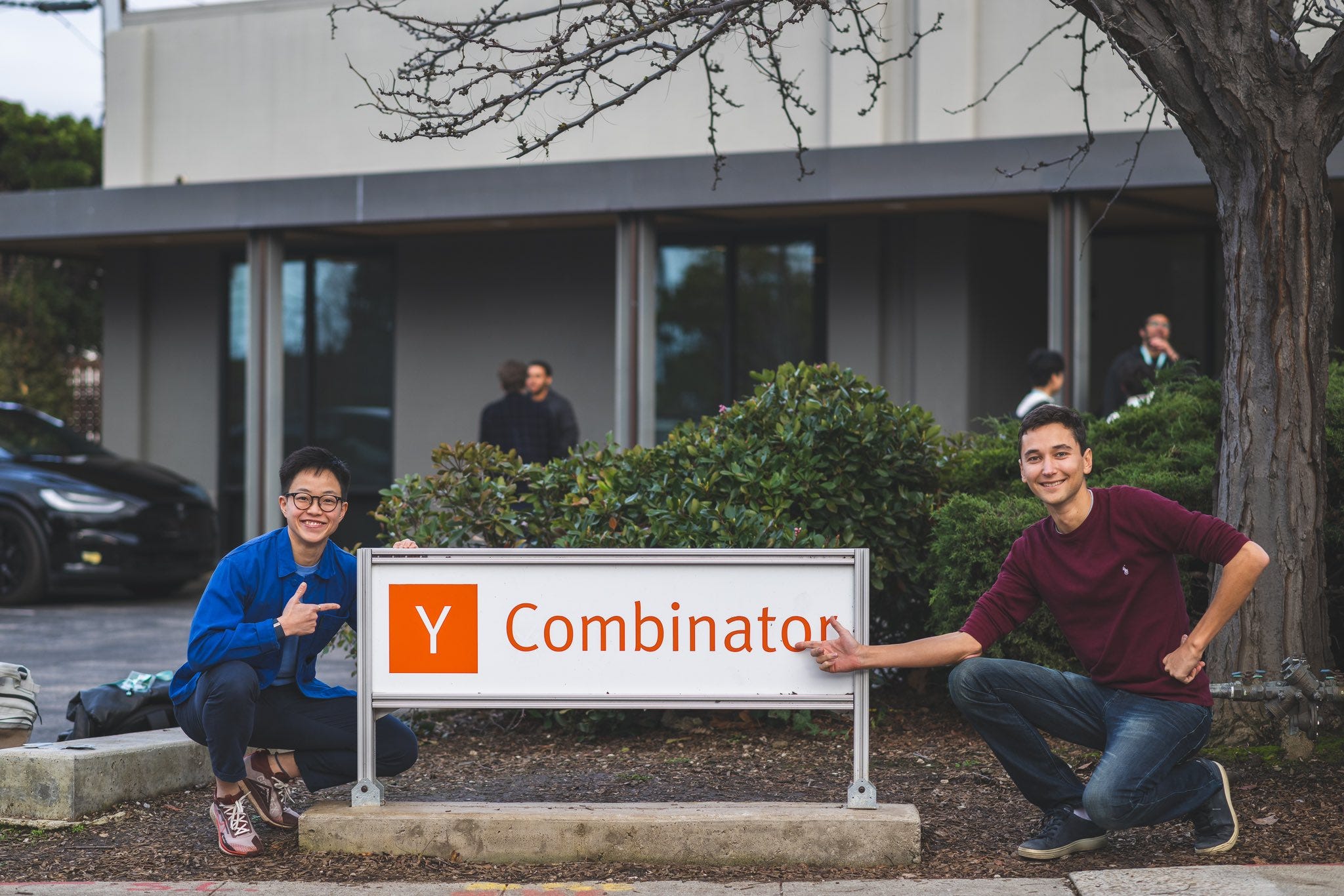
As regular readers will know, I place a huge amount of value on the quality of the founders, of all the people I have interviewed Ka Ling Wu and her Co-Founder are the most impressive people I’ve met, it’s probably no coincidence Ka Ling is the first founder I have interviewed from Palantir/Y Combinator. Upsolve AI was founded in 2023 by Ka Ling Wu and Serguei Balanovich, both of whom bring extensive experience in data engineering and analytics. Prior to founding Upsolve AI, they played pivotal roles at Palantir, where they co-developed the HyperAuto product. This initiative grew to serve over 50 enterprise customers and generated eight-figure annual revenues within two years.
The Problem They’re Solving
As startups scale, they often encounter a deluge of data scattered across various platforms, leading to inefficiencies and missed opportunities. This fragmentation creates a significant barrier to leveraging data for strategic decision-making. Recognising this, Upsolve AI aims to bridge the gap between data accumulation and actionable insights by providing a seamless, no-code solution for data integration and analysis.
Early Market Traction, Customer Validation & Benefits of Y Combinator
With nearly 20 customers already live in production, Upsolve AI has demonstrated early market demand. Customer success stories—such as a company deleting over 10,000 lines of redundant code after adopting Upsolve AI’s no-code solution—highlight the tangible efficiency gains businesses are experiencing.
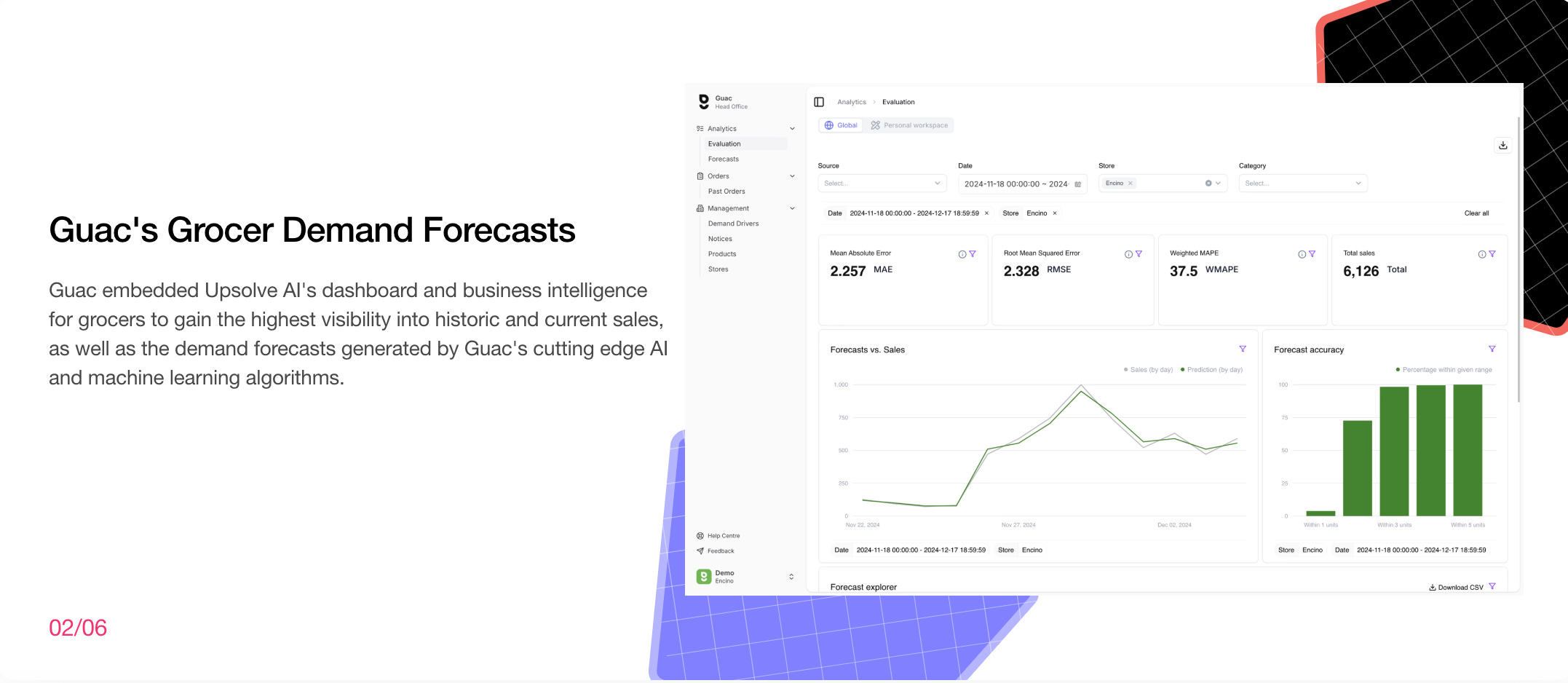
(Upsolve AI customer case study)
They also have a very healthy pipeline of businesses wanting to use their solution. One of the main drivers of this initial traction was their time with Y Combinator, not only does being part of YC mean that people immediately know your solution is serious and likely actually works but it also means that you have a load of potential customers in close proximity who are happy to take the plunge with your MVP because they have met you, know your smart and understand your solution well (especially if you are in the same YC batch). Obviously people use YC to get invaluable product insight and general technical help, I think YC’s primary use is early sales.
Upsolve AI's Comprehensive Solution
Upsolve AI offers a full data stack that enables businesses to rapidly build and deliver analytics to their customers. Key features of the platform include:
No-Code Dashboard Creation: Users can create and customise dashboards without coding, facilitating quick deployment and reducing reliance on specialized engineering resources.
Seamless Data Integration: The platform provides out-of-the-box connections to popular databases and data warehouses, ensuring smooth data consolidation.
AI-Powered Insights: Advanced AI algorithms analyse integrated data to identify patterns, anomalies, and trends, offering deeper business insights that might otherwise go unnoticed.
Embedded Analytics: Businesses can embed analytics dashboards and reports directly into their products, enhancing user experience and engagement.
What are the actual outputs?
Customers choose Upsolve AI for its ability to transform disorganised data into clear, actionable insights:
Effortless Data Management: The platform simplifies data integration and management, allowing businesses to focus on strategic growth without the burden of complex data engineering tasks.
Insights from the data: By providing AI-driven analytics, Upsolve AI enables businesses to make informed decisions based on real-time data.
Comprehensive Solution: Unlike fragmented point solutions, Upsolve AI offers an end-to-end platform that addresses all aspects of data management, from integration to visualisation.
Vision for the Future: AI as a Strategic Partner
The output of an AI is only going to be as good as the data it is fed. Upsolve AI helps you get your house in order in terms of data and so it’s no surprise they see a big part of their value add to customers becoming an AI that surfaces problems/untapped efficiencies or ideas for the human to then take action on. Essentially, they envision a future where AI acts as a strategic partner in business decision-making. By making data accessible and high quality (integral), the platform surfaces insights and analytics, allowing AI to identify what's going right or wrong. Ultimately, AI suggests actions, but humans make the final decisions, ensuring that businesses retain control while benefiting from intelligent automation.
Building a Lean Unicorn: The Upsolve AI Advantage
Ka Ling was keen to point out that her ambition is to build Upsolve super lean, she believes billion dollar businesses with 5-10 person teams will become increasingly common place in the world of successful venture backed businesses. Take the engineering team alone, in 2010 Upsolve likely would have had to hire two/three engineers to build the MVP, another few engineers to build the integrations and the hiring would have increased gradually from there. They are now just over two years into their journey if they had been building ten years ago they would likely have a team of over 10 devs at this stage, costing the business and increasing the pressure to continually raise. That is no longer the case, products like Cursor and Anthropics Sonnet 3.7 mean that developers can now increase their output and speed exponentially, which inevitably leads to less hiring.
Conclusion (why is Upsolve so compelling)
It doesn’t take a genius to know that as more and more data floods into the world of work, it is going to become increasingly difficult to manage it and potentially more importantly take useful insights from it. Upsolve AI exists to help businesses deal with this issue and it has a few serious tail winds, I think the main one being the quality of its Co-Founders, who are easily some of the most focussed and intelligent people I have ever had the pleasure of meeting.
Here are the others:
Addressing a Critical Market Need: The platform caters to the growing demand for accessible, AI-driven data solutions among fast-growing companies.
Scalability with Lean Operations: The company's ambition to build a high-impact business with a lean team = capital efficiency, appealing to investors seeking strong revenue-per-employee ratios.
Proven Customer Impact: With nearly 20 customers already live in production, Upsolve AI has demonstrated its value proposition by delivering measurable results, such as simplifying complex data processes and enhancing decision-making capabilities.
Please find their website below:
https://upsolve.ai/
I liked the vision of AI becoming a strategic partner in decision-making. My current setup doesn’t give me real-time insights, so I often miss patterns in my data. Having something that surfaces problems or ideas automatically would save me so much time.
How do you think businesses can balance trusting AI suggestions with keeping human judgment in the loop? I’d be interested in how to avoid over-relying on tech for big decisions.
The fact that Upsolve AI already has nearly 20 customers in production caught my attention. It’s impressive to hear about a company deleting 10,000 lines of redundant code after using this platform. I’ve struggled with outdated systems myself, and simplifying data management is tempting.
What kind of businesses do you think benefit most from this kind of solution? I’m curious if it’s more suited for certain industries or sizes over others.